
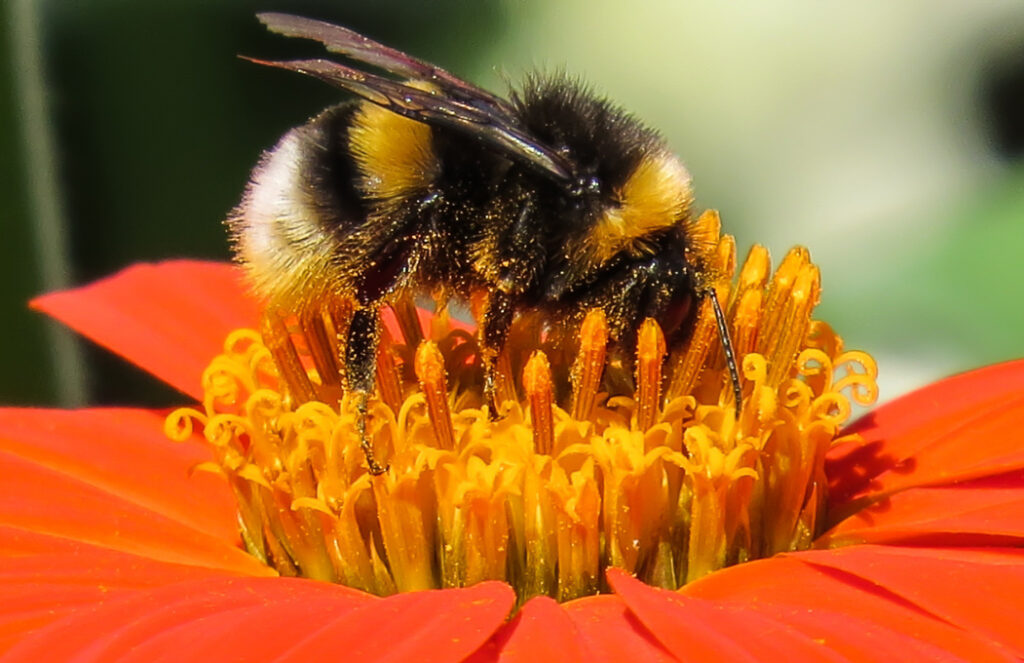
In a well-designed garden, structure and bloom succession work together so that bees and other pollinators find forage from the first warm days of spring through the short days of winter. Mediterranean gardens excel at doing more with less – less water, less maintenance, less fuss – while giving back more habitat, more seasonal color, and more life. Even the smallest balcony can host pots of aromatic herbs that hum with activity, while larger plots can layer shrubs, perennials, and groundcovers into a resilient mosaic that stays attractive in heat and drought. The principle behind every successful scheme is simple: right plant, right place. By observing how sun moves across your space, where wind funnels, and how water drains, you can position each plant where it naturally thrives. Sun-loving aromatics such as rosemary, thyme, lavender, and hyssop power the summer nectar flow; drought-tolerant shrubs like Teucrium fruticans, Cistus albidus, and Phlomis fruticosa anchor the design and provide structure; tough groundcovers such as Erigeron or Ajania knit the planting together, suppress weeds, and extend the floral season along paths and edges.
The result is a continuous nectar corridor: an intentional sequence of blossoms and pollen sources that carries pollinators from one resource to the next as the year turns. In spring, early flowers kickstart bee colonies and fuel solitary bees emerging from dormancy. Through summer’s heat, grey-leaved herbs and native-like perennials offer reliable forage while conserving moisture with their reflective foliage and deep roots. As autumn arrives, late daisies and ivy flowers bridge the seasonal gap, supporting pollinators as they build reserves. Even in winter, architectural plants and evergreen shrubs provide shelter, while well-chosen species like Viburnum tinus or Euphorbia rigida open on mild days to offer lifelines of nectar and pollen.
Design makes the difference. Layering heights creates warm, sheltered microclimates; placing stones, logs, and bare mineral patches invites nesting; and choosing a diverse palette of flower shapes – tubes, daisies, whorls – welcomes a wider range of bees, from bumblebees to long-tongued specialists. With smart soil preparation, permeable surfaces, and efficient drip irrigation for establishment, a Mediterranean-style garden becomes both a sanctuary for wildlife and a restful, low-input space for people. Thoughtful succession planning ensures there is always something in bloom and something to look at, so your garden is as satisfying in January as it is in June, and the pollinators will thank you for it.
Here’s our guide to bee-friendly Mediterranean plants, organized by season and light, which expands beyond the usual list of Mediterranean bee-friendly herbs such as fennel, oregano, rosemary, thyme, and lavender. As this list is geared towards Mediterranean gardens, all of them are drought-tolerant by nature.
Winter
Sun
- Euphorbia rigida (Upright Myrtle Spurge). Euphorbia rigida is a stalwart of Mediterranean-style planting, prized for its sculptural form and near-bulletproof resilience. Spectacular flowering over a long period with bright yellow flowers from January to April, providing an invaluable bridge for honeybees, bumblebees, and early solitary bees when little else is in bloom.
- Teucrium fruticans (Tree Germander). Silvery evergreen with pale blue flowers that open on mild winter days. A long-season resource for bees, and a great structural shrub for hedging or backdrops as it takes well to light clipping for formal lines, or gentle cloud-pruning for a relaxed Mediterranean look.
Sun or partial shade
- Erica manipuliflora (Autumn heather). Heathers are invaluable during the lean months; this Mediterranean species flowers from autumn into winter, drawing in bees to its mass of pink flowers. Its fine, evergreen foliage forms tidy, bushy mounds that keep structure and color even when not in flower.
Sun or shade
- Viburnum tinus. Pink buds turn to clusters of small, creamy-white flowers through winter into spring. After flowering, it sets attractive metallic-blue berries that extend the season of interest and provide food for birds. Tough, urban-tolerant screening that also feeds early foragers.
Spring
Sun
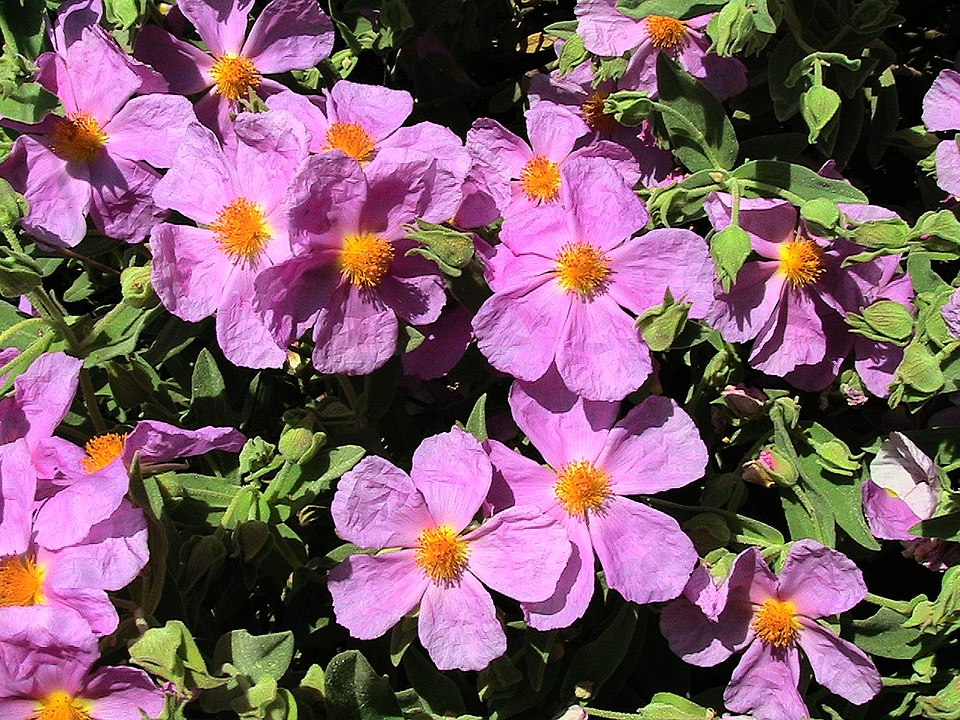
- Cistus albidus (Grey-leaved Cistus). A quintessential Mediterranean shrub with luminous, grey-felted leaves that shrug off heat and drought, and a generous flush of springtime papery pink flowers that bees adore. The crêpe-like flowers, though short-lived individually, appear in succession for weeks. Plant in the hottest, best-drained spots.
- Phlomis fruticosa (Jerusalem sage). Honeyed yellow whorls held above felted leaves provide nectar and arresting structure. After flowering, the sculptural seedheads persist through summer and autumn, catching light and adding rhythmic structure that reads beautifully in low evening sun.
Sun or partial shade
- Lomelosia minoana. Airy pincushion flowers that float above the border, perfect for naturalistic plantings and a steady spring nectar source. Remarkably abundant mauve flowers from March into the summer months.
Sun or shade
- Vinca major (Greater Periwinkle). Early-season nectar for bees that grows well in sun to brighter shade. A robust, evergreen groundcover to retain moisture and suppress weeds with its dense mass of glossy, dark green leaves and large, violet-blue star-shaped flowers that appear from early spring and repeating in the autumn.
Summer
Sun
- Dorycnium pentaphyllum (now often classified as Lotus dorycnium). Fine, grey-green foliage on a tough subshrub that thrives on poor, dry soils; subtle flowers still bring pollinator traffic. Great for stabilizing slopes. While the subshrub is short lived it easily reseeds.
- Hyssopus officinalis (Hyssop). A member of the mint family, its scented spikes buzz with bees and butterflies all summer; shear lightly after the first flush to prolong bloom.
Sun or partial shade
- Achillea millefolium (Common yarrow). A stalwart, drought-tolerant perennial prized for its ferny, aromatic foliage and broad, flat-topped flower clusters that act as perfect landing pads for bees, hoverflies, and butterflies. Flowering typically begins in late spring or early summer. Can also be used as a grass lawn alternative as it is highly tolerant of trampling, and it forms a dense ground cover, requiring little weeding maintenance due to its allelopathic properties (a plant’s ability to produce and release chemical substances (allelochemicals) that inhibit or promote the growth and development of other nearby plants).
Sun or shade
- Myrtus communis (Common myrtle). A classic Mediterranean evergreen that brings fragrance, finesse, and year-round structure. Fragrant blossoms in early to midsummer feed bees, while evergreen structure anchors any garden design. Clip lightly to shape if needed.
Autumn
Sun
- Ajania pacifica (Gold and silver chrysanthemum). Tidy mounds with silver-edged foliage and late yellow buttons—vital nectar when many borders are fading.
- Erigeron karvinskianus (Mexican fleabane). A prolific self-seeder that flowers from spring well into autumn; threads through paving and walls to keep bees visiting. It produces a constant haze of small, daisy-like flowers that open white and age through blush pink to soft magenta—often all three shades on the plant at once. Its wiry stems and fine foliage let it weave through cracks in paving, tumble over low walls, and soften the edges of steps and gravel.
Sun or partial shade
- Rosa chinensis ‘Sanguinea’ (China rose). Light, continuous flowering habit delivers nectar into late season; best with morning sun and good airflow. It can be grown as a dense groundcover, a freestanding shrub, an informal hedge, or trained as a climber, making it a very versatile addition to any Mediterranean garden.
Sun or shade
- Hedera helix (Ivy). An adaptable evergreen that earns its keep both as a climber and as a groundcover, with exceptional wildlife value. While often noticed for its glossy or variegated foliage, its real ecological star turn arrives in late summer to autumn, when mature plants produce domed clusters of small greenish-yellow flowers. These nectar-rich blooms open precisely when many borders are winding down, providing a crucial lifeline for honeybees, bumblebees, hoverflies, and late-flying butterflies. Flowers give way to black berries through winter, feeding birds and extending seasonal interest.
To discover more about bee-friendly gardening, read our other blogs on bee-friendly shrubs or take a look at the RHS site here. You can also contact us directly at Sage Green Gardening to discuss your container gardening needs.